Written by: Matt Sellick, MS, RD
Mountain guiding is hard.
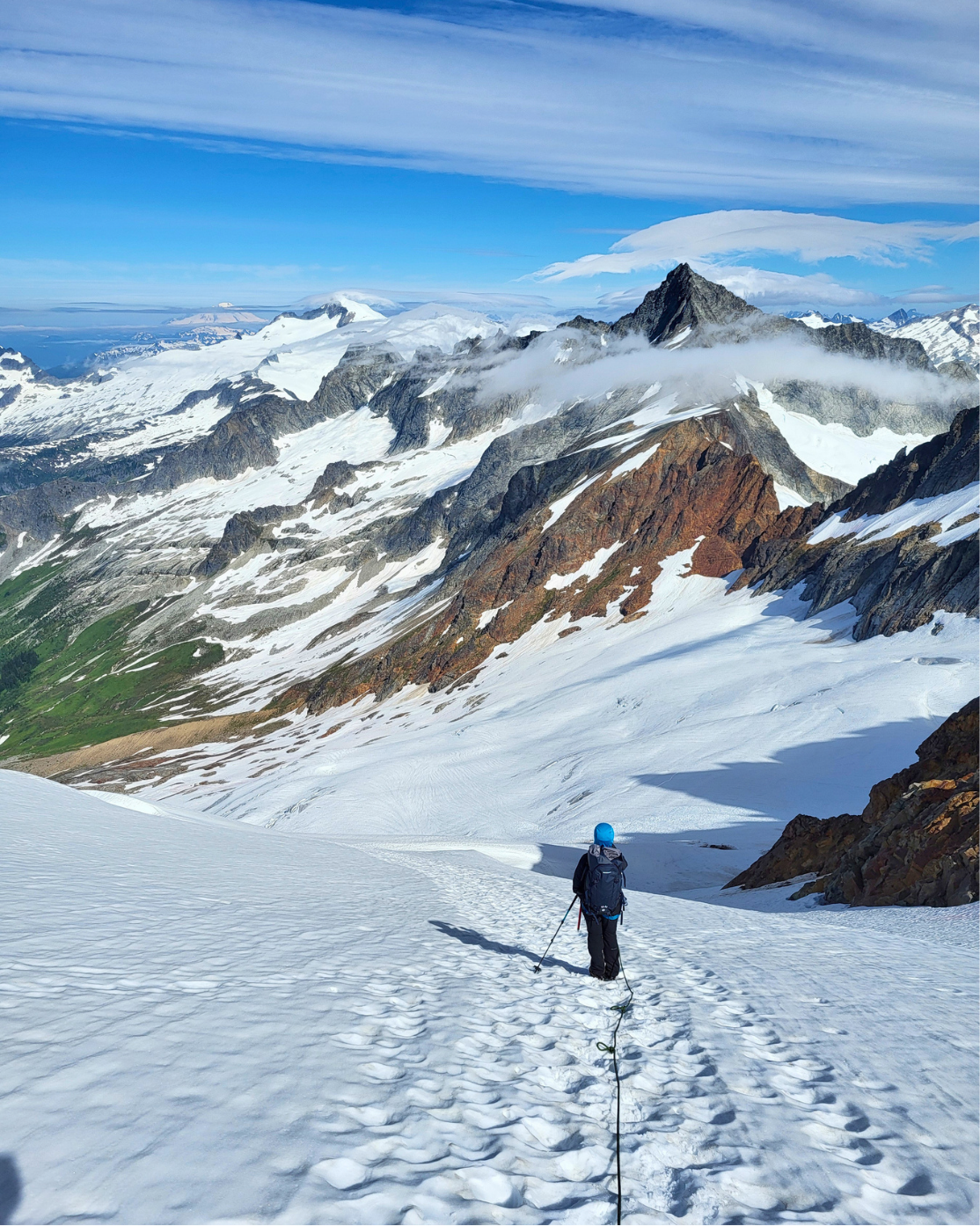
If you’re reading this, you probably know the feeling of a 16-hour day on a route that should’ve taken 8. You’ve likely wished for someone else to take a turn breaking trail on the skin track, or wondered what series of life choices led to leaving a warm tent for the summit in a freezing downpour. The true difficulty usually isn’t the climbing itself—it’s the patience.
As guides, we log the training volume of professional endurance athletes, but we do it with minimal sleep, poor recovery conditions, and a heavy backpack. Yet, most guides I know take either the “I can eat whatever I want as long as I eat a lot of it” approach, or the classic “It’s just an easy day, I don’t need to worry about fuel like my clients do” mentality.
In 12 years of full-time guiding, I haven’t met many guides who treat their fueling with the same precision as elite athletes. That’s not to say they don’t exist, or that some guides don’t fuel their personal adventures with intention.
I’m not trying to be sanctimonious. My own fueling journey has held plenty of misadventure - I’ve been vegan, vegetarian, omnivorous, low-carb, keto, fasted... you name it. For better or worse, I am a kinesthetic learner.
The "gas station diet"—relying heavily on candy, pastries, and processed meats like salami or jerky—is a cheap, calorie-dense solution for fueling an on the go lifestyle. And if you are always in a caloric deficit, you are going to look “healthy.” However, relying on this strategy for a 100-day guiding season can start to take a toll on your health. Using hyper-palatable, highly processed foods as a daily crutch is associated with elevated LDL cholesterol and blood pressure. On the other side, constantly underfueling can affect your hormone, tendon, and bone health and also tank your performance.
There’s not a lot of nutrition advice out there tailored for technical mountain sports. So, in the rest of this blog post I make an effort to compile the current evidence backed recommendations from the literature into actionable nutrition tips to fuel your slogging.
Before we get to that though, let’s look at some of the more pervasive myths out there in mountain nutrition.
Common Mountain Nutrition Myths
Camel Water Before an Alpine Start
The Myth: Chugging two liters of water at the trailhead will keep you hydrated all day.
The Fact: Your gut can only absorb roughly ~800-1000 mL of fluid per hour. Drinking plain water rapidly dilutes your blood sodium levels, accelerating urination. You don't store the water; you just pee it out.
Fat-Adaptation (Keto or low carb) is Best for Alpinism
The Myth: Burning fat means endless energy for long, slow mountain days. We have tons of stored calories of body fat, why not use it as fuel?
The Fact: Fat oxidation requires significantly more oxygen to produce ATP than carbohydrate oxidation. In a hypoxic (low-oxygen) environment, forcing your body to burn fat drastically reduces your oxygen efficiency. Carbs are the best high-altitude fuel.
Eat Fat, Burn Fat
The Myth: Fat is the most calorie dense food by weight (true!) and we burn it as fuel in aerobic exercise.
The Fact: You burn mostly stored body fat in low intensity aerobic exercise. The more trained you are, the more adept you are at burning this fat. You do burn dietary fat, but it takes a long time.
The Dinner Before Summit Day Carb Load
The Myth: Eating 1,500 calories of pasta the night before a summit push guarantees a full tank.
The Fact: Carb loading is real but there is nuance to it. A big meal right before an alpine start can disrupt what limited sleep you’ll get and it diverts blood flow to your gut. You should still prioritize a carb rich dinner, but skip the mega-portion and "drip-feed" your carbohydrates (30-60g per hour) throughout the entire preceding day.
Energy Expenditure, Protein breakdown & Altitude
You might work in the Cascades and think that because you don’t work on the Rainier summit machine, you are not at altitude. Your physiology would say otherwise. Here is a summary of the different altitude zones where there is changes in our metabolism:
High Altitude (2,500m–3,500m / 8,000–11,500 ft): Your baseline metabolic rate increases, and your brain starts muting subtle hunger signals (Karpęcka-Gałka & Frączek, 2024).
Very High Altitude (3,500m–5,500m / 11,500–18,000 ft): Hypoxia significantly dulls your appetite while simultaneously accelerating the breakdown of muscle tissue during heavy physical effort (Karpęcka-Gałka & Frączek, 2024).
Extreme Altitude (>5,500m / >18,000 ft): Physiological deterioration becomes steady. Severe caloric deficits are virtually universal, and catabolic (tissue-wasting) pathways dominate your metabolism (Karpęcka-Gałka & Frączek, 2024).
Your body’s caloric needs increase at altitude. The combination of cold, long days, and hypobaric hypoxia (tissues are deprived of oxygen) elevates both your resting and active energy expenditure. Climbers/skiers at altitude will burn 4,000 to 6,000 calories a day, on average (Karpęcka-Gałka & Frączek, 2024). Some days you will burn even more.
Combine this increased energy expenditure with altitude induced appetite suppression and it is hard to stay in caloric balance. When climbers and skiers are at altitude and are underfueled for long periods of time they are going to lose muscle mass. Here is a summary of what is going on with protein breakdown at altitude:
Stress Hormones: Elevated levels of stress hormones (epinephrine, norepinephrine, and cortisol) drive continuous protein breakdown and raise your resting metabolic rate (Karpęcka-Gałka & Frączek, 2024). There are two processes going on here. The first is called gluconeogenesis where your body takes some of the broken down proteins and packages them into glucose to keep your blood glucose levels stable. The second is called amino acid oxidation where your body takes the glucogenic amino acids from protein breakdown and plugs them into intermediary steps in the citric acid cycle to produce ATP (in essence: energy).
Shutdown of Muscle Repair Pathways: Hypoxia directly inhibits a key component of the pathway - specifically, mTOR complex 1 - that leads to muscle repair (Moberg et al., 2022). So, when you get to camp after a long hard day, your muscles struggle to synthesize new protein afterward. You are probably not building much muscle until you return to a lower elevation.
Carbohydrate Needs
At elevation, your metabolism shifts toward carbohydrates. Carbs yield more ATP (cellular energy) per unit of oxygen consumed than dietary fat, making them your most oxygen-efficient fuel source when oxygen is scarce.
Daily intake targets for alpinists and skiers should reflect those of ultra-endurance athletes: 6 to 10 grams of carbohydrates per kilogram of body weight per day (Karpęcka-Gałka & Frączek, 2024). There has been a lot of debate over the years on being “fat adapted” and which substrate (fat vs carbs) is the best fuel in the mountains. Research on Pikes Peak published in 2018 demonstrated that while short term hypoxia initially slows down how fast your muscles can burn consumed carbohydrates, altitude acclimatization enables higher carbohydrate oxidation rates over time (Young et al., 2018). In other words, once you’re acclimatized, your body resumes carbohydrate burning efficiency. I have experimented with both camps myself and I much prefer the high carb fueling - not only from a performance standpoint, but from a general health standpoint as well.
How many carbs should you eat? For sustained high-output efforts lasting longer than 2 to 3 hours, aim for 60 to 90 grams of carbohydrates per hour (Jeukendrup, 2014; Burke et al., 2019). I would argue that most guiding days are going to fall in this range. However, on mountain days that are higher intensity (think very high altitudes, or climbs where you are consistently pushing beyond zone 2 heart rates), pushing intake up to 90 or even 120 grams per hour—using multiple transportable carbohydrates (combining glucose and fructose in a 2:1 or 1:0.8 ratio)—maximizes absorption speed while minimizing gut distress (Jeukendrup, 2014; Burke et al., 2019). This is in line with the ultra running world, and you need to train your stomach to get used to 120g of carbs per hour. And honestly, if you haven’t ever paid attention to how many grams of carbs you are eating per hour, you are going to notice a huge benefit at just 30g/hr. So to recap, 30–60 g/hour as the baseline, 60–90 g/hour on long hard days, and up to 120 g/hour only for gut-trained athletes during sustained hard efforts.
Protein Needs
Prolonged exertion under hypoxic conditions accelerates muscle tissue breakdown. Consuming a steady stream of essential amino acids—especially branched-chain amino acids (BCAAs) like leucine—is needed for muscle protein synthesis to balance the altitude driven catabolism experienced during multi-day trips.
Historically, protein recommendations for endurance athletes were set too low. Modern research utilizing the Indicator Amino Acid Oxidation (IAAO) method has shown that endurance athletes require roughly 1.6 to 1.8 grams of protein per kilogram of body weight per day to properly rebuild muscle structure after long efforts (Kato et al., 2016; Matsumoto et al., 2023).
Hitting these targets through solid foods alone can be tough (and heavy in the pack) when you are experiencing appetite suppression at altitude. I think that liquid protein supplements (like whey, or recovery drinks like tailwind) provide an easy workaround to protect muscle mass without causing uncomfortable fullness on the trail.
Hydration & Electrolytes
Maintaining fluid and electrolyte balance at elevation is complicated. Hypoxic hyperventilation (breathing faster in thin air) increases water vapor loss through respiration. Cold, dry ambient air exacerbates this by requiring humidification with every breath (Karpęcka-Gałka & Frączek, 2024).
Cold temperatures trigger cold-induced diuresis (CID). Blood vessels near the skin constrict to preserve core heat, shifting blood volume inward. Your kidneys perceive this fluid shift as excess water volume and suppress anti-diuretic hormone (ADH), signaling your body to get rid of fluid through the urine (Karpęcka-Gałka & Frączek, 2024).
To compensate for the fluid loss, mountain athletes should match their mL of fluid to their kcal requirements. So if you need 4-6000 kcal/day you need 4-6L of fluid per day. This is not an exact metric, but it often works well. Keep in mind it is possible to drink too much! To maintain plasma electrolyte balance most people will need anywhere from 0.5 to 1.0 grams of sodium per liter during prolonged mountain exertion (Karpęcka-Gałka & Frączek, 2024). Sweat testing helps narrow this range down and individualize hydration strategies. (Not sure how to interpret your results? Book a session with one of our Registered Dietitians.)
Practical Fueling Strategies for Mountain Guides
Implementing these recommendations requires a plan and a schedule rather than relying on natural hunger cues. To review, we have:
- 6–10 g/kg/day of carbohydrates
- 1.6–1.8 g/kg/day of protein
- Match mL of fluid to kcal. Probably 4-6L.
So, here are some practical ways to implement these recommendations.
Drip-Feed Your Carbohydrates: After you do everything you need to do on your 10 minute hourly break, be sure to get in your 30-90 g of carbs. Stash simple carbohydrates (gummies, chews, gels) in your hip belt, chest pockets, and pants pockets. If you end up 1 minute over your break time, it will be regained when you move faster from being fueled.
Liquid Recovery: Because altitude can make eating solid food unappealing, pack a recovery drink powder that has carb and protein. This will help bridge the 1.6–1.8 g/kg gap without requiring a large appetite or heavy foods.
Make a hydration plan: When you are making your tour plan for the day, write in your mL/hr and carbs/hr goals at all of your pre-determined break spots. Pre-mix your flasks with 0.5 to 1.0 grams of sodium per liter the night before. Make up for lost hydration as soon as you are back at camp, and keep the drinking rate steady rather than in big doses.
Pro deals: Reach out to sports nutrition companies for pro deals. Build a huge box of “science foods” in your gear room.
Every mountain guide has different needs and your fueling strategy should reflect that. At Peak to Peak Nutrition, our dietitians bring real-world experience in the mountains and sports nutrition expertise to help you develop an individualized fueling strategy that works for your job, your body, and your goals. Schedule an appointment with one of our dietitians to start building a plan that supports you on and off the mountain.
References
Burke, L. M., Jeukendrup, A. E., Jones, A. M., & Mooses, M. (2019). Contemporary Nutrition Strategies to Optimize Performance in Training and Competition. International Journal of Sport Nutrition and Exercise Metabolism, 29(2), 117–123. https://doi.org/10.1123/ijsnem.2019-0004
Jeukendrup, A. (2014). A step towards personalized sports nutrition: carbohydrate intake during exercise. Sports Medicine, 44(Suppl 1), 25–33. https://doi.org/10.1007/s40279-014-0148-z
Karpęcka-Gałka, E., & Frączek, B. (2024). Nutrition, hydration and supplementation considerations for mountaineers in high-altitude conditions: a narrative review. Frontiers in Sports and Active Living, 6. https://doi.org/10.3389/fspor.2024.1435494
Kato, H., Suzuki, K., Bannai, M., & Moore, D. R. (2016). Protein Requirements Are Elevated in Endurance Athletes after Exercise as Determined by the Indicator Amino Acid Oxidation Method. PLOS ONE, 11(6), e0157406. https://doi.org/10.1371/journal.pone.0157406
Matsumoto, M., Narumi-Hyakutake, A., Kakutani, Y., et al. (2023). Evaluation of protein requirements using the indicator amino acid oxidation method: a scoping review. The Journal of Nutrition, 153(12), 3472–3489. https://doi.org/10.1016/j.tjnut.2023.07.015
Moberg, M., Apró, W., Horwath, O., van Hall, G., Blackwood, S. J., & Katz, A. (2022). Acute normobaric hypoxia blunts contraction‐mediated mTORC1‐ and JNK‐signaling in human skeletal muscle. Acta Physiologica, 234(2), e13771. https://doi.org/10.1111/apha.13771
Young, A. J., Berryman, C. E., Kenefick, R. W., et al. (2018). Altitude Acclimatization Alleviates the Hypoxia-Induced Suppression of Exogenous Glucose Oxidation During Steady-State Aerobic Exercise. Frontiers in Physiology, 9, 830. https://doi.org/10.3389/fphys.2018.00830
